
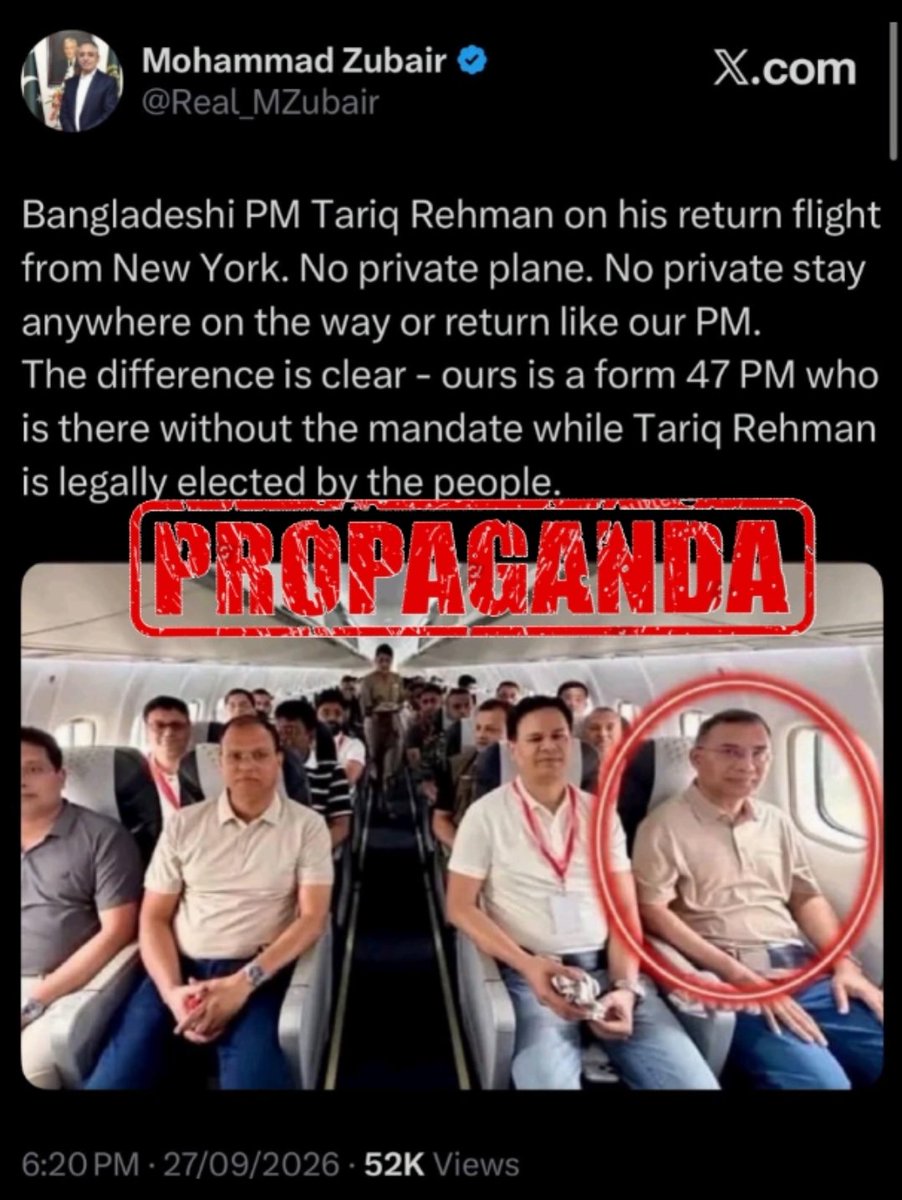
"FACT CHECKFormer Sindh Governor Muhammad Zubair shared four-month-old photos of Bangladeshs Prime Minister on a plane, falsely presenting them as recent images from the UN General Assembly in New York to criticize the Pakistani government. https://t.co/6K4MMeufsY"
In a recent incident, Muhammad Zubair, the former Governor of Sindh, circulated four-month-old photos of Bangladesh's Prime Minister, falsely presenting them as images taken during the recent UN General Assembly in New York. This situation arose amidst ongoing political tensions between Pakistan and its neighbors, and the timeline of events has sparked widespread discussions about media integrity and political discourse.
The dissemination of these misleading images serves to illustrate the current landscape of political communication in South Asia. In the age of social media, misinformation can travel at lightning speed, often overshadowing factual reporting. This incident highlights not only how political figures might leverage social media for critique but also how such actions can impact public perception. The use of outdated photos to cast doubt on the current government's efficacy signals a concerning trend where political narratives may prioritize sensationalism over accuracy.
Responses from international observers have called for enhanced media literacy among the public to differentiate between fact and misinformation. The incident has caught the attention of various analysts who emphasize the necessity of constructive political dialogue in the region. International bodies and media organizations have reiterated the importance of fact-checking to uphold credibility, especially when political tensions are at a high. They underlined that relying on accurate information is vital for fostering diplomacy and mutual understanding among South Asian countries.
As the record unfolds, there's an opportunity for political leaders in Pakistan to engage in more transparent and constructive discourses. Building a responsible media ecosystem is crucial for advancing democracy in the region. Educating the public about verifying information before sharing it could significantly decrease the impact of such misinformation. Moving forward, its imperative for both governments and citizens to advocate for transparency, cooperation, and adherence to facts as the foundation for political stability and regional harmony.


No comments yet. Be the first to comment!
.png)
Your trusted source for breaking news, in-depth analysis, and comprehensive coverage of today's most important stories.
Get daily updates on breaking news, exclusive interviews, and special features delivered to your inbox.
Have a news tip or want to get in touch with our editorial team? We're here to help.
Karte-4, Kabul, Afghanistan